The island everyone sails past
Šolta sits about nine nautical miles off Split, closer than Brač, far closer than Hvar, and near enough that on a clear morning you can pick out its ridge from the Riva. It is the first island a boat leaving Split actually reaches. It is also the one almost nobody books.
The reason is simple and slightly unfair. Šolta has no single thing to put on a poster. Brač has Zlatni Rat. Hvar has the town and the nightlife. Vis has the Blue Cave and Stiniva. Šolta has four small harbours, a lot of pine, some of the best olive oil in Dalmatia and a coastline that nobody photographs for a living. Every tour boat in Split therefore points at something further away and Šolta slides past the window at twenty-five knots.
Which is exactly why we keep stopping there. In August, a bay on Šolta at four in the afternoon is quieter than a bay on Hvar at nine in the morning.
The four harbours, east to west
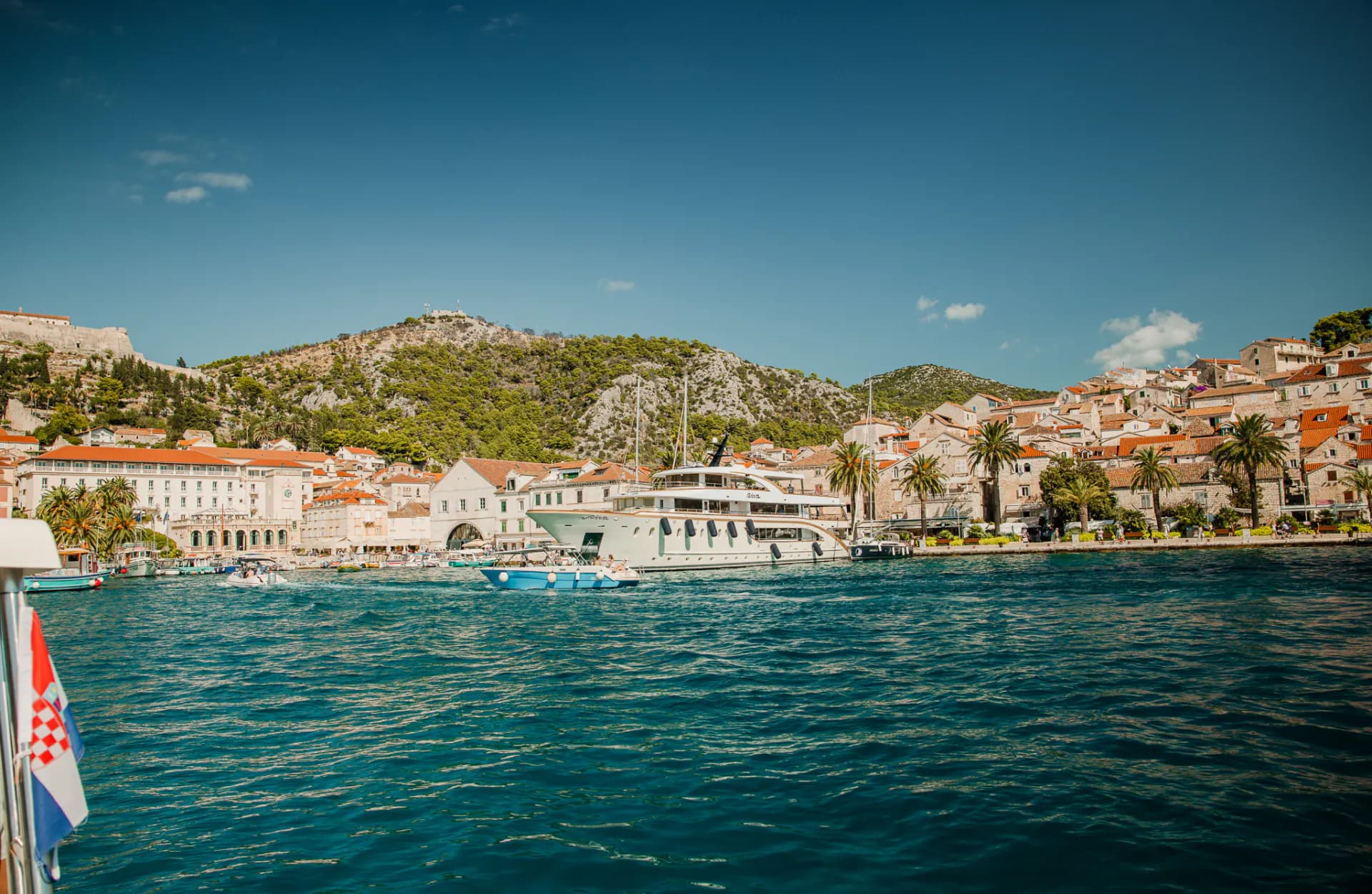
Stomorska is the oldest of them and the one people photograph. A narrow stone inlet on the eastern end, konobas along both sides, fishing boats tied where the road runs out. It was a shipbuilding village before it was anything else, and it still reads like one.
Nečujam is the largest and most sheltered bay on the island, a long shallow inlet with calm turquoise water. It is the swimming bay rather than the pretty one, good for a family stop, unremarkable to walk around.
Rogač is the working port where the Split ferry arrives, framed by pine slopes. There is not much to see, and that is fine; it is where the island connects to the mainland rather than where it shows off.
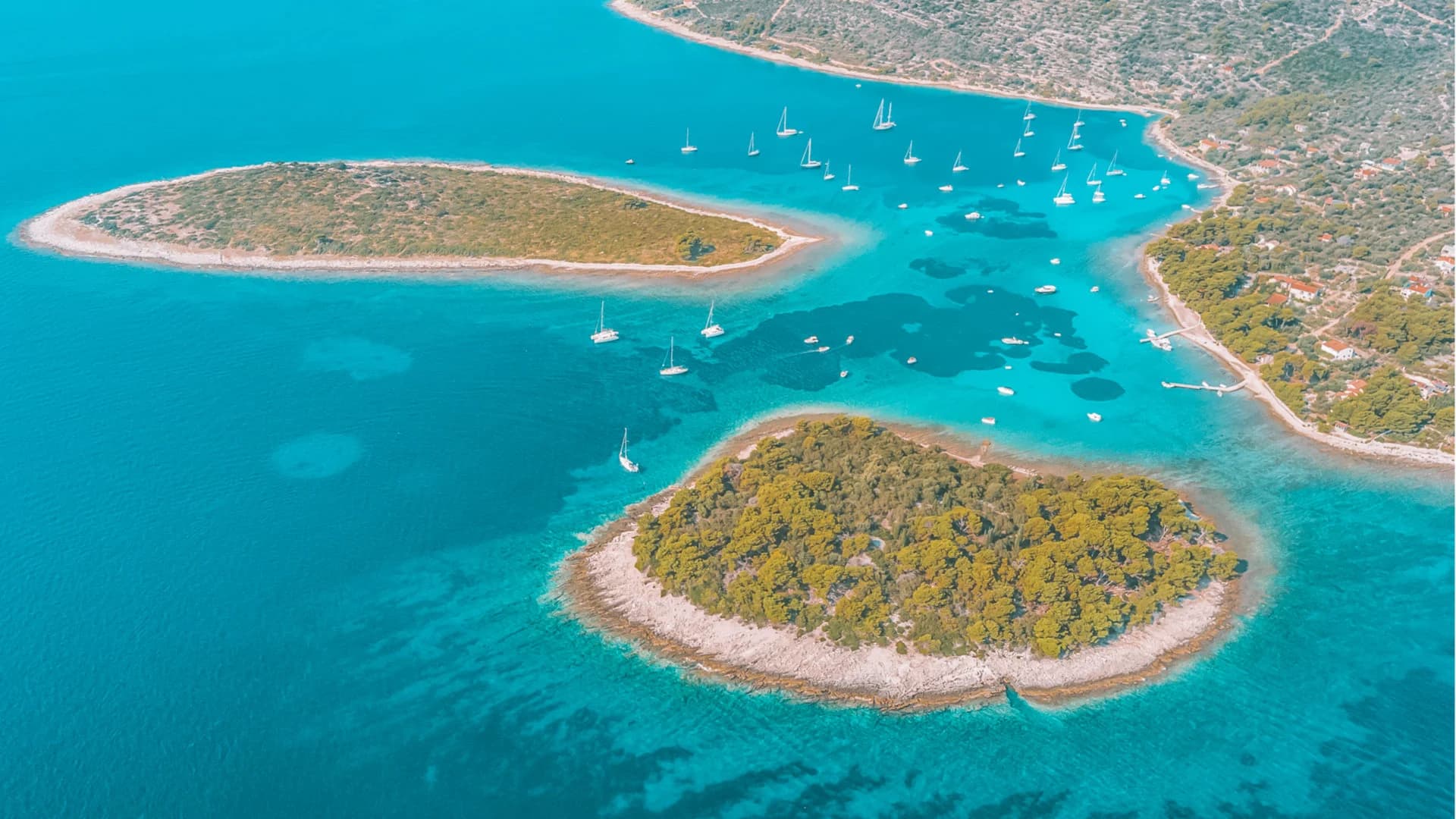
Maslinica is the postcard. The only village on the western tip, founded in 1703 around the Martinis Marchi manor, a fortified house built by a noble family to keep pirates off. It faces a small archipelago of seven islets strung across the water in front of the harbour, and the view across them is the one photograph of Šolta most people have seen without knowing where it was taken.
Gornja Krušica, and why it is always the last stop
Gornja Krušica is a cove on the eastern end of Šolta, past Stomorska, facing the channel toward Brač. It is the last swim on our Hvar, Pakleni, Brač and Šolta private day, and its position is the whole reason.
By mid-afternoon the maestral has been blowing across the open water for hours and most bays on the exposed side of the islands have gone choppy. Krušica faces the wrong way for that wind. The water there stays flat and, because it is shallow and has had sun on it since morning, noticeably warmer than anything you swam in earlier.
The practical part matters as much as the pretty part. Krušica sits almost exactly on the line between Hvar and Split. Stopping there costs no extra cruising time at all: it is forty-five minutes in the water taken out of a run you were making anyway. That is rare enough to be worth planning around.
The wreck off Maslinica
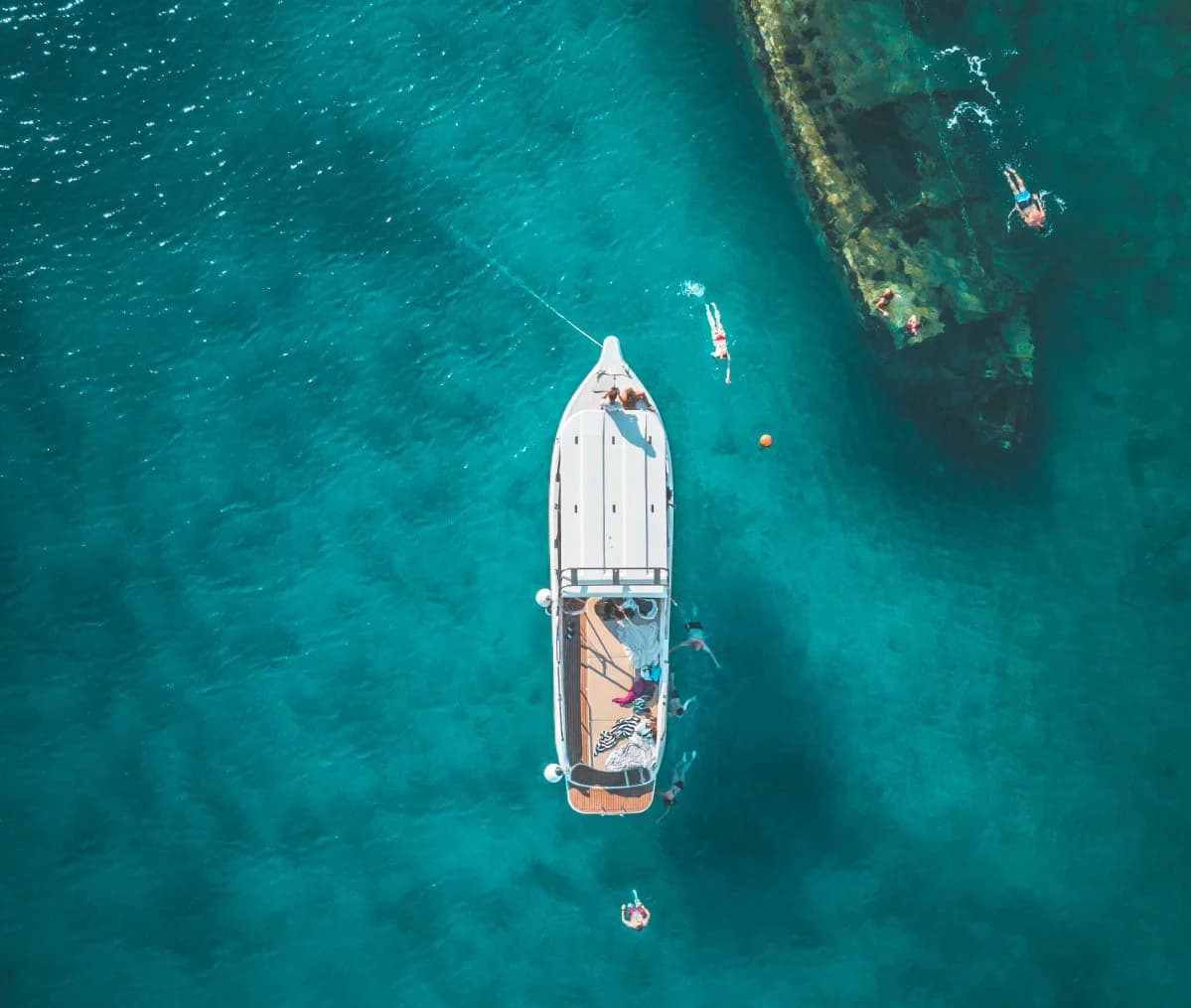
A few hundred metres off Maslinica lies a small commercial vessel that sank in shallow water in the late twentieth century. Not a warship, not treasure: a working fishing and transport boat that has spent several decades being colonised by everything that lives on the Adriatic floor.
It sits between roughly eight and fourteen metres down, bow shallower than stern. From the surface with a mask you can see the whole shape of it. The hull and superstructure are furred with algae and anemones and there are usually schools of small fish working the deck.
You do not need to dive it. Snorkelling directly above it in clear water is the point, a recognisable ship lying under you, close enough to see properly, without a certificate or a tank.
Ferry or boat: an honest comparison
The Jadrolinija ferry runs Split to Rogač and takes about an hour. If you are staying on Šolta for a few days, that is obviously how you go. It is cheap, it is frequent enough in summer, and it puts you on the island with your bags.
What it does not do is show you the island. Šolta is a coastline, and the coastline is the interesting part: the wreck, the seven islets, the coves between the villages, Krušica. From Rogač you would need a car and a lot of the day to reach three of the four harbours, and you would still be looking at the sea from the land.
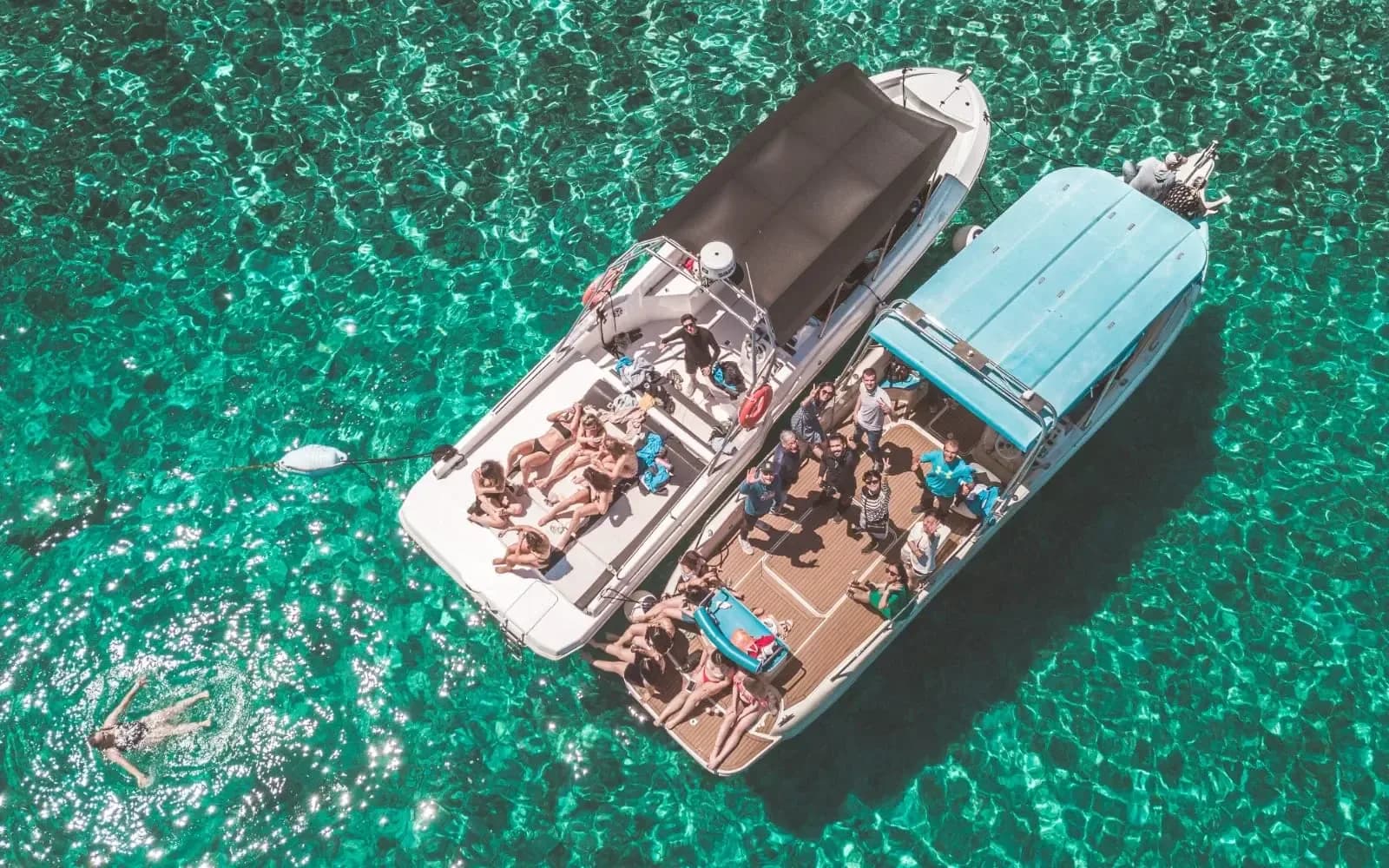
A boat day inverts that. You see the island the way it was built to be seen, from the water, and you can swim off the parts that have no road to them. It costs more. It is a different product, not a better ferry.
When to come
Šolta is at its best exactly when everywhere else is at its worst. July and August on Hvar mean queues for a mooring; on Šolta they mean a bay with two boats in it. If you are travelling in high season and want one day that does not feel like high season, this is where to spend it.
September and early October are better still: the sea is at its warmest of the year after a summer of heating, the maestral softens, and the island empties. Our season runs to early November and the last few weeks on Šolta are among the quietest days we run all year.
What Šolta does not have
It is worth saying plainly, because the island gets oversold by people who have never been. There is no nightlife. There is no famous beach: the swimming is off rock and off the boat, not off sand. There is no headline sight you will feel you have to photograph, and if you are collecting the big names of the Dalmatian coast, Šolta is not one of them.
What it has is space. If the thing you actually want from a day on the Adriatic is water you can swim in without twenty other boats in the frame, and a harbour where lunch takes as long as you want it to, Šolta gives you that within an hour of Split. Nothing else this close does.
Frequently asked questions
Is Šolta worth visiting?
Yes, if you want a quiet day rather than a famous one. Šolta is the closest large island to Split at about nine nautical miles, and because it has no headline attraction it stays far emptier than Brač or Hvar in July and August. It suits swimming, harbours and long lunches, not sightseeing or nightlife.
How do you get from Split to Šolta?
The Jadrolinija ferry runs from Split to Rogač in about an hour, which is the right choice if you are staying on the island. For a day trip a boat is better, because Šolta's coastline (the wreck off Maslinica, the seven islets, the coves at the eastern end) is only reachable from the water.
Where is Gornja Krušica?
On the eastern end of Šolta, past Stomorska, in a cove facing the channel toward Brač. It is sheltered from the afternoon maestral, so the water stays flat and warm late in the day, and it sits directly on the line between Hvar and Split.
Which is the prettiest village on Šolta?
Maslinica, on the western tip. It was founded in 1703 around the fortified Martinis Marchi manor and faces a small archipelago of seven islets. Stomorska on the eastern end is the runner-up and the more working of the two.
Can you snorkel the sunken ship at Šolta?
Yes. The wreck lies a few hundred metres off Maslinica at roughly eight to fourteen metres, shallow enough that you can see the whole ship from the surface with a mask. No diving certificate or tank is needed.
Is Šolta better than Brač or Hvar?
It is quieter, not better. Brač has Zlatni Rat and Hvar has the town and the nightlife; Šolta has neither and gets a fraction of the traffic because of it. Choose Šolta when the emptiness is the point, and Hvar or Brač when you want the famous sights.
Stomorska and the Blue Lagoon in one private day
Milna on Brač and the hidden bay beside it, then Stomorska on Šolta, the Blue Lagoon at Drvenik and UNESCO Trogir. Eight hours, your boat only, €1,000 for up to twelve.
See the private island-hopping day →